
Jefferies, IIFL, and JM Financial - none of which were in the top five last year - have now claimed the top spots in the league tables for equity capital markets (ECM) during the first nine months of calendar year 2023 (CY23), a period characterised by small- and mid-sized transactions. This shift marks a significant change, with these firms outperforming the bulge-bracket investment banks. According to data provided by Refinitiv, Jefferies leads the domestic ECM market, having handled share sales worth $2.3 billion, representing 12.4 per cent of the total volume of $18.4 billion for ECM transactions.

Top gainers in the Sensex pack included Bharti Airtel, Tata Motors, IndusInd Bank, Kotak Bank, Hero MotoCorp, Asian Paints and PowerGrid, which rose up to 2.53 per cent.

Market benchmark Sensex tumbled over 323 points after an intense last-hour sell-off on Wednesday, triggered by losses mainly in index heavyweights Infosys, Reliance and HDFC.
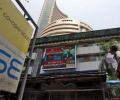
The broader NSE Nifty soared 133.10 points, or 1.22 per cent, to end at 11,573.30.

After opening on a weak note, the 30-share BSE index settled 226.79 points, or 0.55 per cent, higher at 41,613.19 -- hitting an intra-day high of 41,697.03 and a low of 41,275.60. Likewise, the broader NSE Nifty closed 67.90 points, or 0.56 per cent, up at 12,248.25.

The brokerage earnings estimate for the January-March 2024 quarter (Q4FY24) for Nifty 50 companies hints at a slowdown in corporate profit growth while revenue increase is likely to be in low single digits as in the previous two quarters. According to various brokerage estimates, the companies' combined net profits are expected to grow 3.1 per cent year-on-year (Y-o-Y) in Q4FY24, the slowest in the last five quarters. For comparison, the index companies' combined net profits were up 8.2 per cent Y-o-Y in Q3FY24 and 3.4 per cent Y-o-Y in Q4FY23.
The Yes Bank Reconstruction Scheme 2020, shall come into force on March 13, the gazette notification said.

Among the Sensex firms, UltraTech Cement, Reliance Industries, ICICI Bank, HDFC Bank, Bharti Airtel, IndusInd Bank, State Bank of India, Tata Consultancy Services, Larsen & Toubro, Kotak Mahindra Bank and State Bank of India were the major gainers. In contrast, Tata Motors, Maruti, Axis Bank, Mahindra & Mahindra, ITC, NTPC, Tata Steel and Bajaj Finserv were the major laggards.

ITC was the biggest loser from the Sensex pack, sliding 2.04 per cent, followed by Power Grid, Reliance Industries, Larsen & Toubro, Nestle, Kotak Mahindra Bank, Bajaj Finance and JSW Steel. On the other hand, Titan, State Bank of India, Bajaj Finserv, Axis Bank, Tata Steel, Sun Pharma, Tech Mahindra and Bharti Airtel were the gainers.

Top laggards in the Sensex pack were Vedanta, IndusInd Bank, Yes Bank, Tata Steel, ONGC, Tata Motors, Sun Pharma, M&M, TCS and Hero MotoCorp, dropping up to 5.39 per cent.

Operating margins have been the primary driver of corporate earnings in India in recent quarters, despite revenue growth suffering from weak consumer demand. Companies across sectors have reported a sharp improvement in earnings before interest, tax, depreciation, and amortisation (Ebitda) margins over the past two years, benefiting from lower commodity and energy prices. Higher margins more than compensated for slower revenue growth, resulting in double-digit growth in net profit for five consecutive quarters.

From the Sensex pack, Infosys, Hindustan Unilever, Reliance Industries, ICICI Bank, Larsen & Toubro, Asian Paints, Nestle, Axis Bank, Wipro and Kotak Mahindra Bank were the major gainers. JSW Steel, State Bank of India, Tata Steel, Bajaj Finserv, UltraTech Cement, IndusInd Bank, Tata Motors and Bajaj Finance were the major laggards.
While HDFC Bank has vowed to recoup its lost market share in the credit card segment in three to four quarters by aggressively sourcing new cards, brokerages believe it is a little hard to come by, given how competitive the landscape has become, with other players in the market becoming equally aggressive to gain market share. Kotak Institutional Equities in its report on Monday said, "We would like to believe that the recovery in market share is likely to be gradual, if any. "All the key players, including Axis Bank, are now willing to expand their credit card portfolios as they have tested quite well against Covid-19."

Tata Steel was the biggest gainer in the Sensex pack, rising 3.36 per cent, followed by Vedanta, Bajaj Finance, TCS, IndusInd Bank, Infosys, ONGC, Kotak Bank, HDFC Bank, HDFC, M&M and ITC.

After the finance minister directed public sector banks to join the account aggregator (AA) ecosystem, 5-6 major ones, including State Bank of India (SBI) and Bank of Baroda are expected to go live by July-end. Sahmati, an industry alliance for the AA ecosystem, has been working with PSU banks to get them onboarded for quite some time now. So far, Union Bank of India and Punjab National Bank (PNB) have gone live on the AA ecosystem. While Union Bank has been live for a while, PNB went live earlier this month.

Among the Sensex firms, JSW Steel, Tata Motors, Tata Steel, Tata Consultancy Services, NTPC, Wipro, HCL Technologies, State Bank of India, Larsen & Toubro, UltraTech Cement, IndusInd Bank, Kotak Mahindra Bank, Power Grid and Reliance Industries Limited were the major laggards. Mahindra & Mahindra and Bajaj Finance were the gainers.
It recorded total income of Rs 54,606 crore (Rs 546.06 billion) and net profit of Rs 9,810 crore (Rs 98.10 billion) on stand-alone basis.

Among the Sensex firms, State Bank of India, Infosys, Titan, Tech Mahindra, IndusInd Bank, NTPC, ICICI Bank, Power Grid, Reliance Industries and Kotak Mahindra Bank were the major laggards. On the other hand, Tata Motors, Nestle, Hindustan Unilever, Tata Steel, Bajaj Finance and UltraTech Cement were among the gainers.
Other losers included Vedanta, Tata Steel, NTPC, ONGC, L&T, M&M, Coal India, Maruti, PowerGrid, Axis Bank, ITC and HDFC, dropping up to 5.75 per cent. On the other hand, Kotak Bank, Bharti Airtel, HCL Tech, Bajaj Finance and Hero MotoCorp rose up to 0.95 per cent.

The market capitalisation of BSE-listed firms jumped to an all-time high of Rs 304.53 lakh crore on Wednesday, buoyed by an unprecedented rally in equities where the BSE benchmark Sensex ended over the 67,000-mark for the first time ever. Rallying for the fifth day running, the 30-share BSE Sensex climbed 302.30 points, or 0.45 per cent, to end at its lifetime closing high of 67,097.44 points. During the day, it jumped 376.24 points, or 0.56 per cent, to reach its all-time intra-day peak of 67,171.38 points.

From the Sensex pack, Nestle, Tata Consultancy Services, IndusInd Bank, Asian Paints, Bharti Airtel, Tech Mahindra, UltraTech Cement, Kotak Mahindra Bank and Hindustan Unilever were among the major laggards. Tata Steel, JSW Steel, HCL Technologies, Axis Bank, Power Grid and Mahindra & Mahindra were among the gainers.

State Bank of India, HDFC Bank, Kotak Mahindra Bank, and IDFC Bank have filed a petition against the notice, in a last-ditch attempt by the banking system to keep the information confidential. The notice was given to the lenders under Section 11(1) of the RTI Act, seeking third-party disclosure requirements. While the apex court's original directive in 2015 applied to the full report, it was subsequently agreed that not the entire report but only relevant portions, such as those on bad debts and borrowers, would be made public.

Disappointing quarterly earnings numbers and revenue forecast from IT services company Wipro also weighed on investor sentiments. The 30-share BSE Sensex fell 247.78 points or 0.38 per cent to settle at 65,629.24 points. During the day, it plunged 533.52 points or 0.80 per cent to 65,343.50 points.
The Sensex and Nifty spiralled lower for the fourth session on the trot on Wednesday as investors remained on edge ahead of US inflation data, which will give clues on the Federal Reserve's policy tightening trajectory. Unabated selling by foreign institutional investors and a jump in crude prices also weighed on sentiment, traders said. Despite a firm start, the 30-share BSE Sensex failed to carry forward the momentum and ended at 54,088.39, lower by 276.46 points or 0.51 per cent. During the day, it tumbled 845.55 points to 53,519.30.
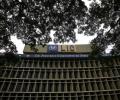
Sixteen merchant banks are in the fray to act as book running lead managers (BRLM) for the initial public offering of Life Insurance Corporation of India (LIC). These merchant banks will have to make a presentation before the Department of Investment and Public Asset Management (DIPAM) on August 24-25. The shortlisted banks are BNP Paribas, Citigroup Global Markets India, BofA Securities, Goldman Sachs (India) Securities, HSBC Securities and Capital Markets(India), J.P. Morgan India, Nomura Financial Advisory and Securities (India), Axis Capital, DAM Capital Advisors, HDFC Bank, ICICI Securities, IIFL Securities, JM Financial, Kotak Mahindra Capital, SBI Capital Market, and Yes Securities India.


Tata Steel was the top loser in the Sensex pack, shedding 3.01 per cent, followed by M&M, Maruti, Asian Paints, PowerGrid, ITC and Axis Bank.

The rally was mainly driven by financial, consumer durables, auto and oil and gas stocks.
Tata Steel, Tech Mahindra, NTPC, JSW Steel, Power Grid, UltraTech Cement, HCL Technologies and HDFC Bank were among the major gainers. Bharti Airtel, Hindustan Unilever, Axis Bank, Reliance Industries, Kotak Mahindra Bank, ICICI Bank and IndusInd Bank were among the laggards.

SBI was the top loser in the Sensex pack, shedding over 1 per cent, followed by Reliance Industries, Tech Mahindra, M&M, L&T, Bharti Airtel, IndusInd Bank and HDFC. NSE Nifty slipped 31.60 points to 15,824.45.

Ask rediffGURU and PF expert Milind Vadjikar your insurance, stocks, mutual fund and personal finance-related questions.

With the last quarter of 2023-24 (FY24) expected to have been soft owing to lower discretionary spend and macro uncertainty, many are hoping FY25 will be a year of recovery for the information-technology (IT) industry. The fourth quarter, January-March, is considered soft, and will continue to see the headwinds the sector has been facing. And the sector has entered the new financial year on a weak footing. Analysts are expecting Tier-I firms to report sequential growth of -1 per cent to 1.5 per cent and midcap players' growth may range between 0.7 per cent and 4 per cent.

The combined market capitalisation of BSE-listed companies hit an all-time high of Rs 343.48 lakh crore on Monday, amid a rally in equities after the BJP registered victory in assembly polls in three Hindi heartland states. Following the sharp uptick in the market, investors became richer by over Rs 5.81 lakh crore on Monday. The 30-share BSE Sensex jumped 1,383.93 points, or 2.05 per cent, to close at a lifetime high of 68,865.12.
Sun Pharma emerged as the biggest gainer from the Sensex pack, climbing 2.09 per cent, followed by ITC, Titan, Bajaj Finance, Nestle, Infosys, L&T, JSW Steel, Reliance Industries and Kotak Mahindra Bank. UltraTech Cement, Maruti, HDFC Bank, Wipro, State Bank of India and NTPC were among the laggards.
Maruti Suzuki, SBI, HDFC, Hero MotoCorp and Infosys too gained up to 2.55 per cent.
Move can also bring a huge change in the way business is done in India, where firms use multiple current accounts, often for even individual projects, making them difficult to monitor.
Sun Pharma, Bajaj Finserv, Tata Consultancy Services, Infosys, Hindustan Unilever, JSW Steel, Wipro, Maruti, HCL Technologies, Tech Mahindra and ICICI Bank were the other major gainers. State Bank of India, Tata Motors, Axis Bank, Kotak Mahindra Bank, Bajaj Finance, Tata Steel, Nestle and HDFC Bank were the laggards.

The only feasible way to have a healthy banking sector could be making it mostly private, along with two or three large, better-run government banks, suggests T N Ninan.

Global trends, trading activity of foreign investors and movement of oil benchmark Brent crude would dictate terms in the domestic markets this week, analysts said. Equity markets, which fell nearly 3 per cent last week, may face volatile trends amid the monthly derivatives expiry on Thursday. "This week marks the September month Futures and Options (F&O) expiry, which is expected to bring about volatility in the market," said Santosh Meena, Head of Research, Swastika Investmart Ltd.
Tata Steel and Axis Bank were among the top gainers in the Sensex pack, surging up to 6.67 per cent following their March quarter results.
